Research Article
STEM Infusion into Mathematics Curriculum for Pre-Service Teachers
From the Math and Sciences Department, Kapi‘olani Community College, Honolulu, Hawai‘i.
Hervé Collin, PhD
herve@hawaii.edu
ABSTRACT
This study investigates the impact of an innovative instructional model—the applying, connecting, experiencing framework —on pre-service elementary teachers’ (PSETs’) science, technology, engineering, and mathematics (STEM) teaching efficacy and mathematics content knowledge. The project aimed to produce measurable gains in both teaching confidence and mathematical competency by embedding engineering design through an integrated, mathematics-enhanced STEM module utilizing 3D-printed drones to support a community-based experiential learning experience with elementary school students. The study was conducted within an online, 8-week geometry-focused mathematics course for 2 semesters. Student learning and perceptions were assessed using pre- and post-semester questions from the T-STEM instrument as well as a competency-based assignment designed to target key mathematical concepts embedded within the STEM module. Findings indicated improvements in PSETs’ teaching efficacy in both science and mathematics, as well as statistically significant gains in mathematical content knowledge. Most participants perceived the drone module as highly relevant to real-world STEM contexts, and the majority reported increased interest in teaching STEM. However, perceptions of elementary school students’ engagement during the community-based experiential learning component were mixed.
INTRODUCTION
Pre-service elementary teachers (PSETs) play a crucial role in delivering science, technology, engineering, and mathematics (STEM) education to the young generation of students. Therefore, it is imperative that they receive a solid foundation in both sciences and mathematics throughout their education to convey these principles and methods to elementary school students efficiently. In the United States, elementary teachers are expected to teach a variety of subjects; however, many lack adequate preparation in mathematics and the sciences, as most do not hold a college degree in these fields (Garner et al., 2024). In mathematics specifically, Garner found that most elementary teachers fall short of meeting the minimum suggested preparation recommended by the Standards for Preparing Teachers of Mathematics (AMTE, 2017). Gravemeijer et al. (2017) highlighted this issue, stating that “we are not currently preparing students for the demands of the 21st century workplace and world” (page 120).
This raises the question of how PSETs’ education can be enhanced to better prepare them for the demands of teaching STEM subjects. A key component of preparedness is self-efficacy. Research has shown that negative attitudes toward science are likely to result in less engaging and less effective instruction (Ibourk & Mathis, 2024), while higher self-efficacy is associated with increased confidence and more effective science teaching (Asilevi et al., 2024). Furthermore, it is generally recognized that confidence in one’s abilities, skills, and beliefs enhance task performance (Sultan et al., 2018). As such, implementing innovative strategies to enhance both competency and self-efficacy among PSETs is essential.
Integrating all or some of the STEM disciplines when teaching concepts and methods is not a new idea in education. Integrated STEM education has been proposed and advocated for over a decade to promote deeper learning and understanding. While many researchers have proposed numerous definitions of integrated STEM, they all share a common key element that situates content in real-world contexts to enhance student motivation and learning (Kelley & Knowles, 2016; NRC, 2014). Research has shown that when teaching mathematics, integrating and contextualizing STEM concepts can improve students’ conceptions and attitudes about STEM (Menon et al., 2023), enhance motivation for learning as well as student interests (Tytler et al., 2023), and strengthen students’ knowledge and identities as future STEM educators (Maiorca et al., 2023).
This study examines the integration of a new and innovative course design model called applying, connecting, experiencing (ACE) into an online college mathematics content course for PSETs, with a focus on geometry. Specifically, we aimed to foster PSETs’ mathematical learning and understanding, improve their teaching confidence in both mathematics and science, and enhance their self-efficacy as future elementary educators. Through the implementation of an integrated, mathematics-enhanced (IME) STEM inquiry module and a community-based experiential learning (CBEL) opportunity, this study aims to address the following research questions: 1) To what extent does participation in the ACE math course improve PSETs’ mathematics learning and their teaching abilities in mathematics and science? and 2) How does participation in the ACE math course affect PSETs’ self-reported confidence in their abilities as future elementary school teachers?
The ACE Framework
To advance scholarship in early STEM education and PSET preparation, an innovative pedagogical framework known as the ACE model was developed and implemented in 4 geographically distributed institutions ranging from community colleges to research-centered universities for 6 semesters. This model was specifically designed to immerse PSETs in integrative STEM learning experiences that emphasize interdisciplinary connections and elevate their understanding and appreciation of mathematics within the broader STEM context. The ACE model provides a consistent structure for fostering sustained, high-impact engagement with mathematics and STEM teaching and learning, and also cultivates an active, inquiry-driven learning environment that empowers future educators through 3 interrelated components:
- Applying learned knowledge and skills to the practice of teaching: The phrase applying learned knowledge and skills to the practice of teaching is closely related to pedagogical content knowledge (Silver, 2013) and knowledge of content and students (Hill & Ball, 2008). In mathematics content courses, PSETs are often asked to interpret students’ mathematical thinking and learning processes, a critical yet challenging aspect of elementary teaching. Many PSETs struggle with these tasks because they have limited experience understanding how children learn mathematics. Providing opportunities to apply knowledge in authentic teaching contexts extends learning beyond the university classroom. Interactions with elementary students allow PSETs to connect theory to practice and develop instructional expertise. This approach aligns with Bybee’s (2013) assertion that while disciplinary knowledge is essential, students must also learn how to apply knowledge and skills to real-world situations (page 3).
- Connecting crosscutting concepts through STEM inquiries and practices: In mathematics classrooms, active learning strategies and student-centered practices engage PSETs in meaningful learning, such as using hands-on activities to make abstract concepts visible and connecting mathematics to other disciplines. The connecting component of the ACE model extends these experiences through integrated STEM inquiries, enabling PSETs to explore crosscutting concepts and understand how mathematics contributes to science, technology, and engineering (English, 2015). By engaging in STEM practices, PSETs develop foundational STEM competencies and deepen their understanding of integrated STEM teaching and learning (NRC, 2011). In this study, we utilized IME STEM inquiry modules to help PSETs identify and transfer key mathematical and scientific concepts across disciplines, reinforcing the interconnectedness of STEM fields.
- Experiencing community-based experiential learning: The experiencing component of the ACE model draws on constructivist and sociocultural perspectives of learning. Cobb (1994) argued that mathematical learning involves both individual knowledge construction and participation in the practices of a broader mathematical community. CBEL provides PSETs opportunities to engage with elementary students in authentic educational settings, connecting personal meaning-making with socially situated learning. Through these interactions, PSETs develop mathematical reasoning while learning to navigate diverse perspectives and learning needs. Consistent with research on CBEL, these experiences not only support mathematical learning but also foster professional commitment, civic engagement, and positive beliefs about mathematics teaching and learning (Erickson & Anderson, 1997; Bringle & Hatcher, 2000; NRC, 2014).
Each element of the ACE model has shown promise for improving prospective elementary teachers’ learning outcomes (Kolb, 2015; Bransford, Brown & Cocking, 2000), but all 3 elements have rarely been integrated and deployed in a mathematics course for PSETs. Through this structured approach, the ACE model aimed to build both content confidence and pedagogical self-efficacy in mathematics and science teaching. By engaging deeply with authentic STEM contexts and community-centered experiences, PSETs were supported in developing a stronger professional identity as capable and confident future elementary educators.
METHODS
The findings of this paper focus on data collected at a community college in Hawai‘i from PSETs enrolled in an online, accelerated, 8-week, “Mathematics for Elementary Teacher II” course conducted over 2 semesters from Spring 2024 to Fall 2024 using a quadcopter drone as an integrated IME STEM module.
Participants
Seven out of 9 students enrolled in Spring 2024, and all 3 students enrolled in Fall 2024 consented to participate in this project and completed all the assessments; therefore, data from these 10 participants were included in this research. All PSET participants (N=10) were female, 1st- or 2nd-year students, and the same instructor taught the course across both semesters. The PSETs attended regular online class, spent 3 hours working in-person on the drone module in a STEM lab on campus, and then facilitated the drone module with a group of elementary school students in a local school (the CBEL activity of the course work). Through the CBEL activity, each PSET participant engaged up to 6 4th- and 5th-grade students per semester. This engagement occurred over 2 1.5-hour sessions at a partner elementary school where the student population exceeded 90% minority enrollment, with 70% classified as economically disadvantaged.
Implementation
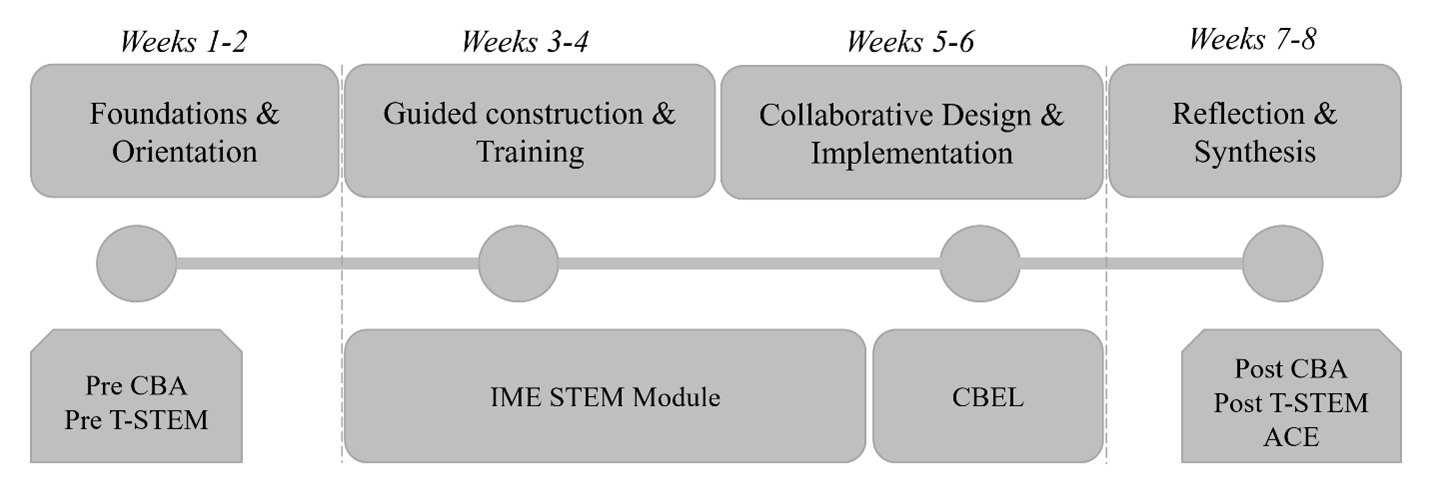
Throughout the module, participants integrated core science, technology, engineering, and math concepts with hands-on drone construction, pedagogical training, and reflection. The module was implemented in 4 distinct, 2-week phases as shown in Figure 1.
Integrated STEM Module
The STEM module was designed and tested to help PSETs explore how to assemble a drone and fly it along a vertical wooden dowel. It provided PSETs with the opportunity to revisit and apply concepts of symmetry and measurement, as well as scaling and congruence when introduced to the 3D printer slicer software. Through this module, PSETs developed a deeper understanding of electricity, lift, roll, pitch, yaw, and flight stability, particularly how stability relates to the quadcopter drone’s blade rotations and pairing.
The IME STEM module implementation, featuring 3D-printed, 4-propeller drones, was scaffolded throughout the 8-week semester. While the core course was conducted synchronously online, the STEM module training was held face-to-face during a 2-hour session during Phase 2. This gave PSETs the opportunity to experience the engineering process firsthand through system assembly and troubleshooting (Figure 2). The module culminated in Phase 3 with the CBEL activity, where PSETs led the drone assembly and flight implementation with elementary students at the community partner school. During the 3D-printed drone assembly and testing training session, PSETs completed the following steps:
- Motor and Propeller Assembly: Glued 4 mini-motors into the 3D-printed drone frame and connected all positive and negative wires. They then attached matching propellers to opposite motor shafts, with 2 opposing motors rotating clockwise and the other 2 counterclockwise, to ensure the drone would properly push air downward for a proper lift.
- Speed Controller Setup: Secured the main electrical wires into the speed controller module and mounted it, along with the power button and speed adjustment knob, into its protective 3D-printed outer casing.
- System Integration: Connected the entire system using simple, clip-on plastic connectors to bridge the battery power pack to the control box.
- Wiring Guidance: Routed the long control wires up through a vertical safety guide pole and clipped them directly into the drone's twisted motor wires.
- Flight Testing: Inserted the rechargeable batteries into the power pack, turned on the power switch, and slowly adjusted the potentiometer (speed knob) to watch the drone take flight up the pole.
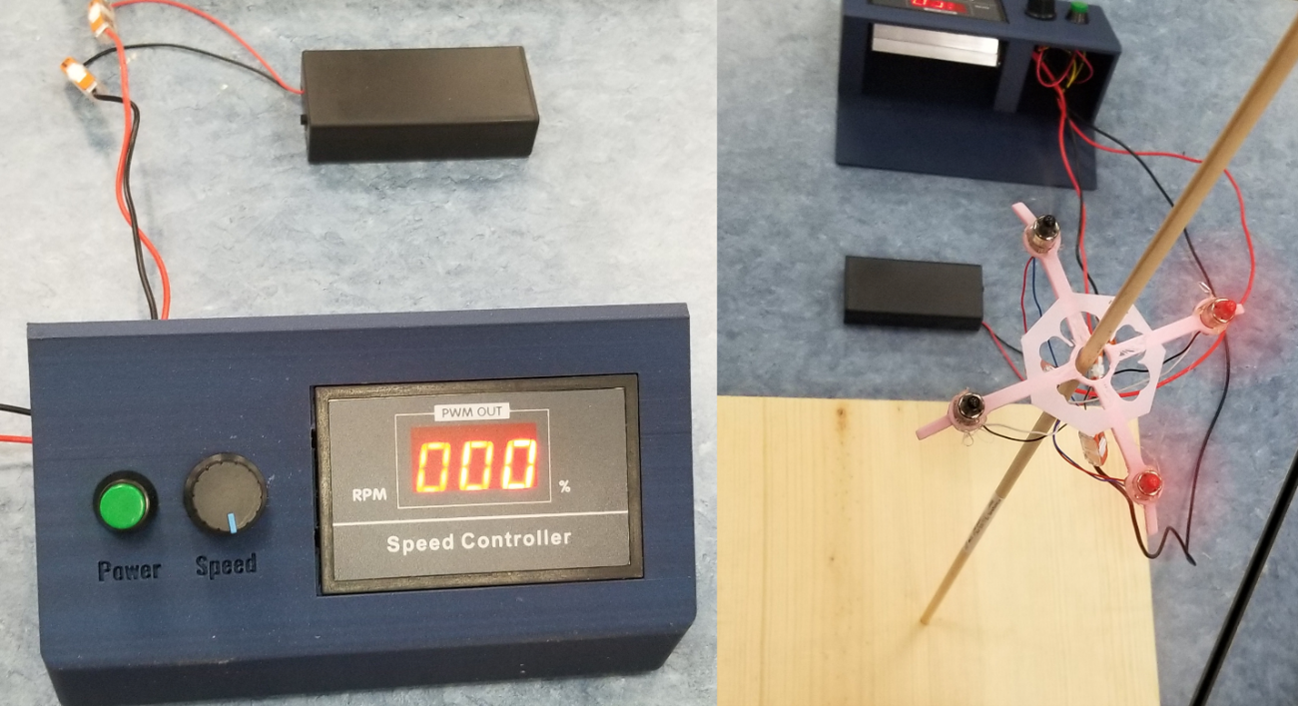
Figure 2. Drone control system setup for the IME STEM module.
Data Collection
During both semesters, PSETs were engaged in the inquiry-based IME quadcopter drone STEM module and lesson planning for the CBEL activity. To measure PSETs’ teaching efficacy and beliefs in mathematics and science, one question (The STEM module helped me connect Mathematics, Science, Technology, and Engineering content to real world phenomena) was used from the end-of-semester ACE survey and 22 questions were used from the pre- and post-semester Teacher Efficacy and Attitudes Toward STEM (T-STEM) survey (2012), which used a 5-point Likert scale. The number of responses given by the 10 participants were 20 (pre and post) for the 11 questions about science and 11 questions about mathematics, for a total of 440 responses. The T-STEM Survey Items measuring PSETs’ teaching efficacy and beliefs in science and mathematics were:
- I am confident that I can teach science/mathematics effectively.
- I am continually improving my science/mathematics teaching practice.
- I know the steps necessary to teach science/mathematics effectively.
- I am confident that I can explain to students why science/mathematics experiments work.
- I wonder if I have the necessary skills to teach science/mathematics.
- I understand science concepts well enough to be effective in teaching science/mathematics.
- Given a choice, I would invite a colleague to evaluate my science/mathematics teaching.
- I am confident that I can answer students’ science/mathematics questions.
- When a student has difficulty understanding a science/mathematics concept, I am confident that I know how to help the student understand it better.
- When teaching science/mathematics, I am confident enough to welcome student questions.
- I know what to do to increase student interest in science/mathematics.
Five questions from the same T-STEM survey assessed perceptions of elementary students’ engagement during the CBEL activity. The number of responses by the 10 participants were 20 (pre and post) for the 5 questions, or a total of 100 responses analyzed. Specifically the participants were asked how often they believed students engaged in the following tasks during their instructional time:
- Developing problem-solving skills through investigations.
- Making predictions that can be tested.
- Recognizing patterns in data.
- Creating reasonable explanations of results of an experiment or investigation.
- Completing activities with a real-world context.
All responses from the survey were also converted to numeric values (Table 1). They were complemented by one post-semester additional question (The CBEL activity increased my interest of future teaching in STEM). Finally, a pre- and post-semester competency-based assignment (CBA, which was developed for this project) measured changes in PSETs’ mathematical skills relevant to the IME STEM module.
| Table 1. Likert Scale Conversion of Survey Responses. | ||
|---|---|---|
| Survey Answers | Numerical Association | |
| Teaching Beliefs Questions | Student Engagement Questions | |
| Every time | Strongly agree | 5 |
| Usually | Somewhat agree | 4 |
| About half the time | Neither agree nor disagree | 3 |
| Occasionally | Somewhat disagree | 2 |
| Never | Strongly disagree | 1 |
RESULTS
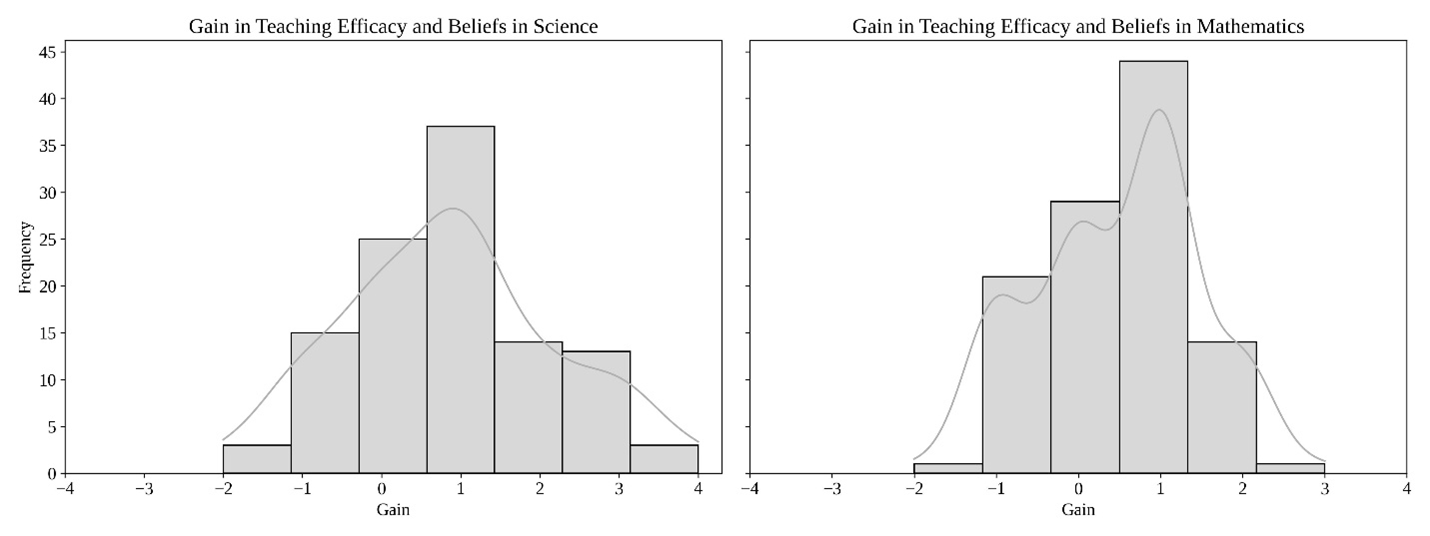
This study analyzed data from 10 consenting college PSET participants who completed all pre- and post-intervention instruments. To address the first research question, responses from the T-STEM survey (Table 1) were used, and gain scores were calculated for each question by subtracting pretest scores from posttest scores. Pre- and post-intervention responses from 11 questions about beliefs in teaching mathematics and 11 questions about beliefs in sciences from 10 participants were used. As shown in Figure 3, 54% of participants showed gains in mathematics teaching efficacy, and 61% showed gains in science teaching efficacy. Twenty-six percent (mathematics) and 23% (science) reported no gain, while 20% and 16%, respectively, reported a decrease in gain. The distributions of gains between science and mathematics show more extreme positive shifts in science.
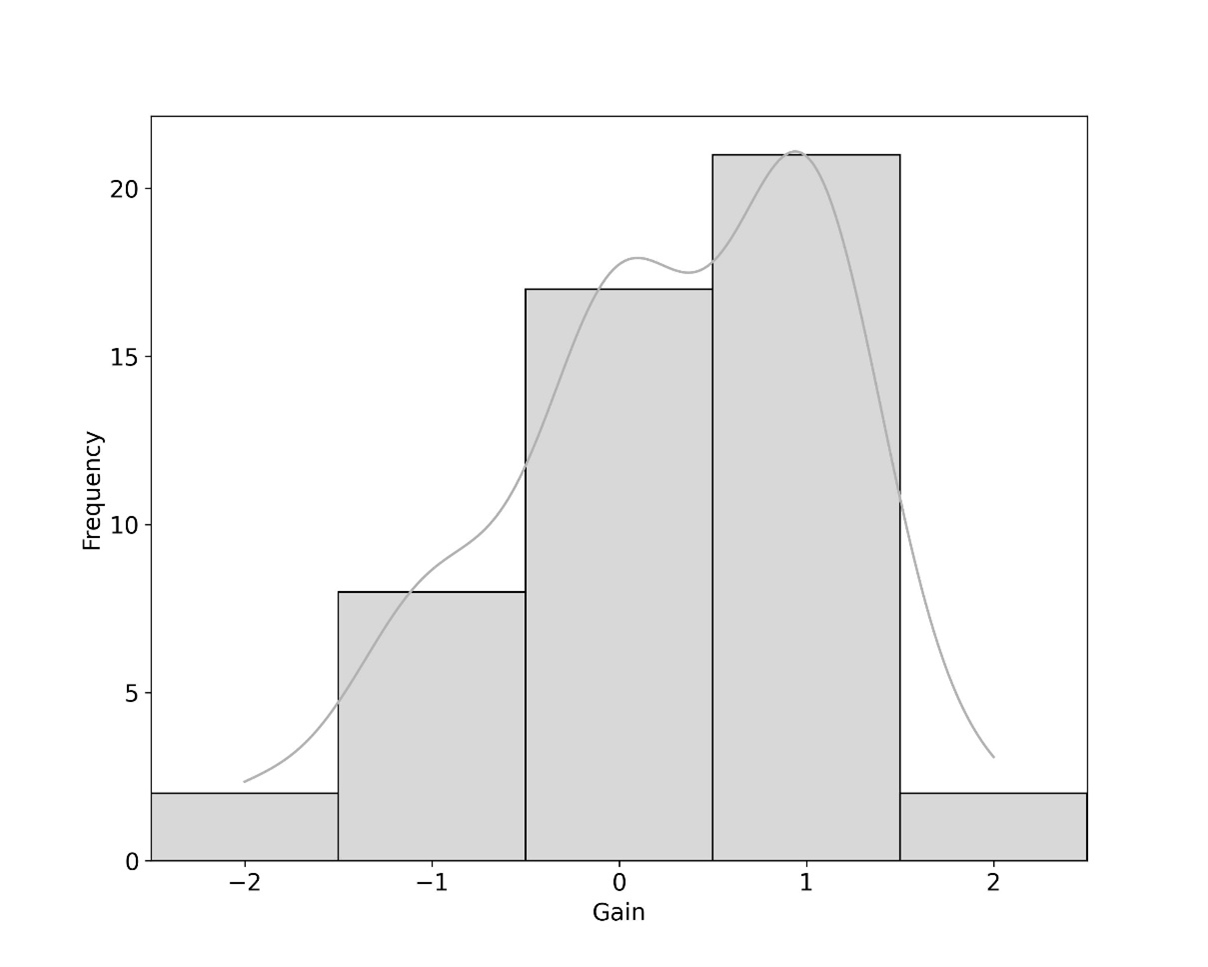
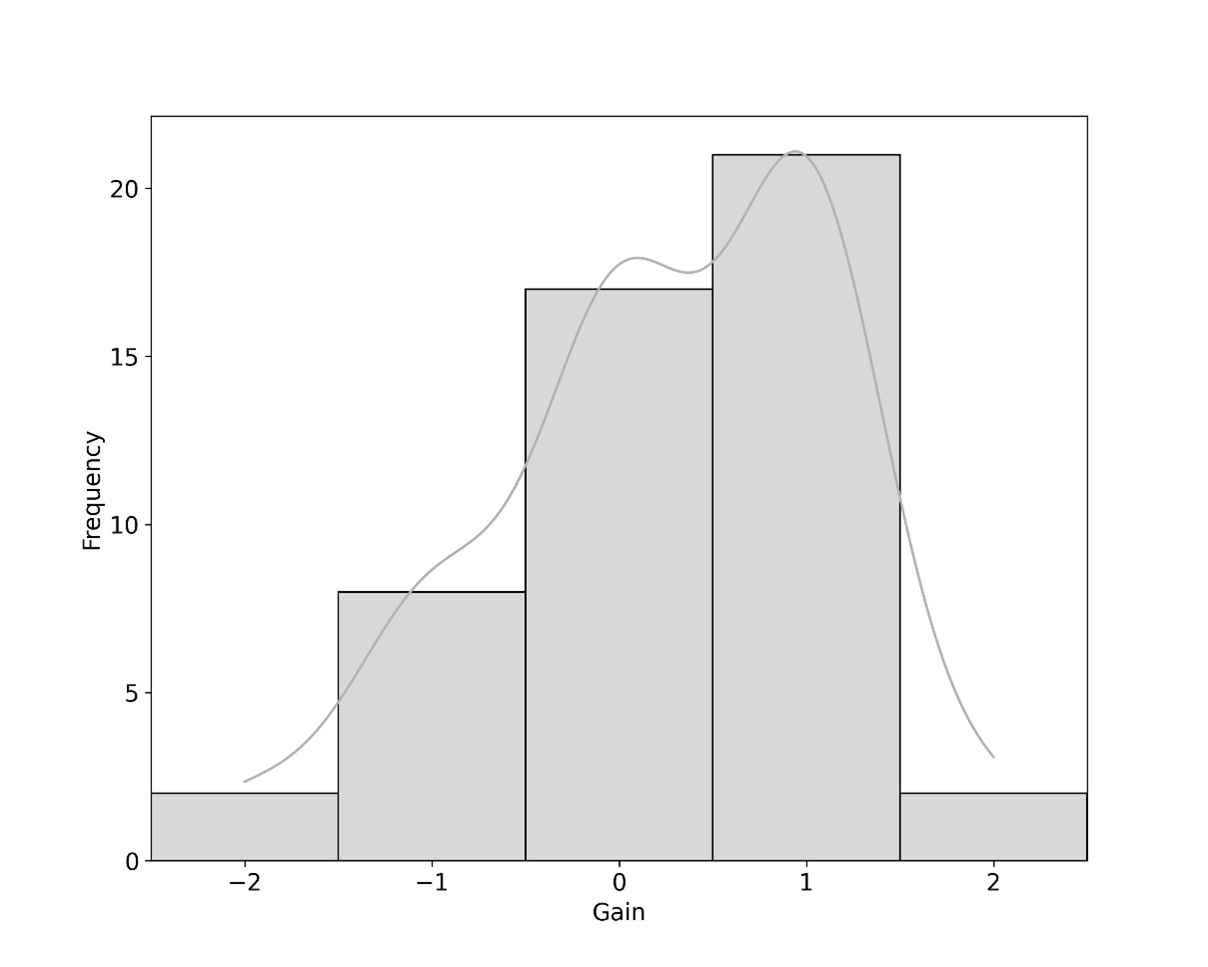
The CBA questions (maximum score = 21 points) were designed to assess PSETs’ competencies on the mathematical concepts that the IME STEM module exhibits. Analysis of the CBA scores revealed that all but one participant demonstrated a positive gain, and 2 showed no change (Figure 4). Due to the small sample size, the non-normal distribution of pretest and posttest scores, and the dependent, paired nature of the data, a one-sided non-parametric Wilcoxon signed-rank test was conducted. The test indicated that post-CBA scores (median = 16) were significantly higher than pre-CBA scores (median = 9), resulting in a large effect size (W = 2.0, p = 0.01, r = 0.50). This result confirms a statistically significant improvement in mathematical competency, suggesting that the 3D-printed drone IME STEM module may have been a factor effectively enhancing participants’ mathematical understanding.
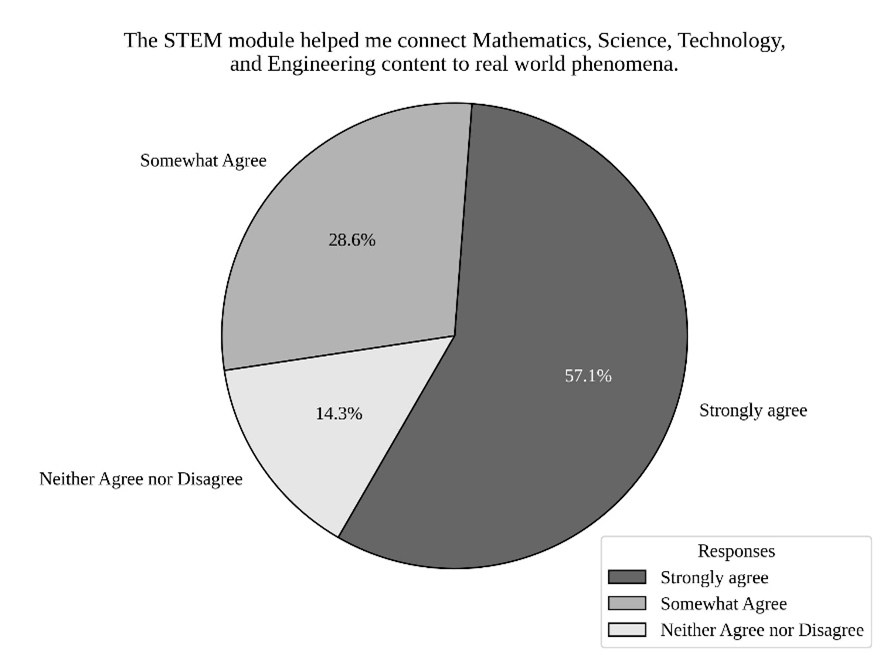
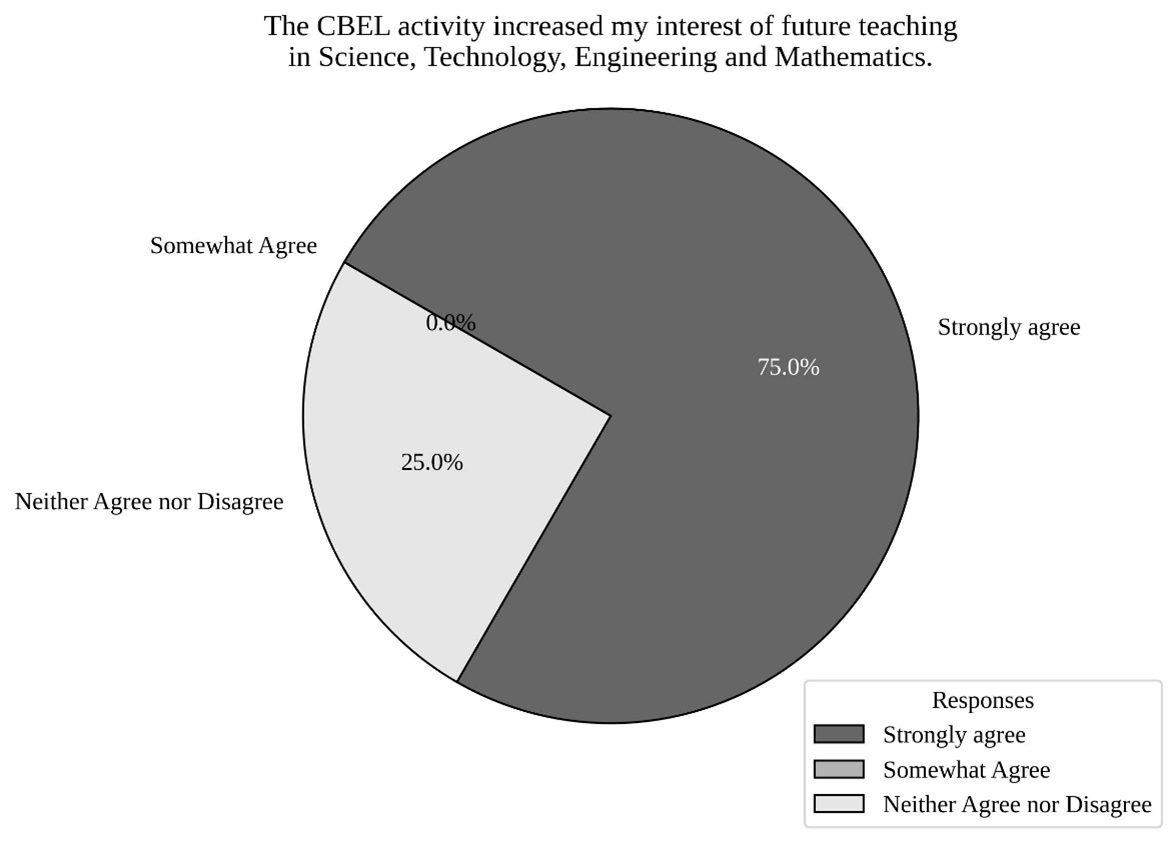
With respect to the second research question, when asked if the module helped connect STEM content to real-world phenomena (8 out of 10 participants answered that question), 57% of participants strongly agreed, 29% somewhat agreed, and 14% neither agreed nor disagreed (Figure 5). No participants disagreed, suggesting that the drone module was perceived to be impactful and relevant to real-world phenomena. Regarding the CBEL activity (N = 10), 75% of participants strongly agreed that it increased their interest in teaching STEM (Figure 6). However, when asked how often they believed elementary students were engaged in tasks related to science through the CBEL activity (based on pre- and post-responses from 10 participants on 5 questions) 46% of PSETs reported an increase in their belief, 34% reported no change, and 20% reported a decrease (Figure 7).
DISCUSSION AND CONCLUSION
This study examined the implementation of the ACE model through an IME STEM module which involved engineering design, specifically focusing on the assembly and flight of a 3D-printed drone. The aim was to assess its effects on PSETs’ teaching efficacy in science and mathematics and their mathematical content knowledge. Results indicated an overall improvement in PSETs’ teaching efficacy and beliefs in both subject areas. These findings align with prior studies, which have shown that integrated, contextualized STEM instruction enhances content understanding (Menon et al., 2023) and learner motivation (Tytler et al., 2023). The 3D-printed drone-integrated STEM activity was positively received in terms of its perceived relevance to real-world applications, which supports the argument made by Kelley and Knowles (2016) that real-world relevance is a key element of effective integrated STEM education.
However, not all outcomes were uniformly positive. The variability in responses regarding elementary students’ science engagement during CBEL suggests that not all PSETs perceived the instructional experience as entirely successful. This variation may be explained by the limited time committed to the CBEL sessions during which elementary students duplicated PSETs’ training and troubleshot steps to assemble and fly their drone, which potentially altered participants’ perceptions of the activity’s value. Furthermore, while the CBA confirmed statistically significant improvements in participants’ mathematical skills, the lack of a control group makes it impossible to definitively attribute these gains to the IME STEM module. External factors may have influenced performance, or similar improvements might have occurred without the intervention.
Consequently, this study is subject to several limitations. Most notably, the small sample size (N = 10) significantly limits the generalizability of the findings. Additionally, the primary reliance on self-reported measures may also introduce response bias, and the absence of a comparison group restricts the ability to isolate the module’s exact impact. Despite these limitations, the project illustrates the promise of the ACE model as an innovative approach to teacher preparation in STEM. Future research should focus on expanding the implementation of this standardized IME STEM module across multiple institutions to increase the participant pool and incorporate a distinct control cohort.
ACKNOWLEDGEMENTS
This material is based upon work supported by the National Science Foundation under Grant Number 2111549. Any opinions, findings, and conclusions or recommendations expressed in this material are those of the author and do not necessarily reflect the views of the National Science Foundation. My deepest appreciation is extended to Dr. Sasha Wang at Boise State University, the principal investigator of this project—and the author of the ACE model—for her inspiration, leadership, and continuous support. Special thanks to Professor Mary-Ann Esteban-Geil whose commitment was instrumental in teaching the Mathematics for Elementary Teachers II course and in implementing the ACE model. Deep gratitude is also owed to Mr. Erik Bendickson for his expertise, technical support, and dedication to the development, design, printing, and troubleshooting of the drone module. Finally, sincere thanks to Mrs. Lynn Kobayashi, principal of Kūhiō Elementary School, and Mr. Charles Kim, teacher at Kūhiō Elementary School, for graciously supporting our collaboration and welcoming PSET students to engage 4th and 5th grade learners through the CBEL activity.
REFERENCES
- Asilevi, M. N., Havu-Nuutinen, S., & Kang, J. (2024). Secondary school teachers’ interest and self-efficacy in implementing STEM education in the science curriculum. European Journal of Science and Mathematics Education, 12(2), 297–311. https://doi.org/10.30935/scimath/14383
- Association of Mathematics Teacher Educators. (2017). Standards for preparing teachers of mathematics. https://amte.net/standards.
- Bransford, J. D., Brown, A. L. & Cocking, R. R. (Eds.). (2000) How people learn: Brain, mind, experience, and school. National Academies Press.
- Bringle, R. G., & Hatcher, J. A. (2000). Reflection in service learning: Making meaning of experience. In Introduction to service-learning toolkit: readings and resources for faculty (pp.111–17, 137). Campus Compact.
- Bybee, R. W. (2013). The case for STEM education: Challenges and opportunities. NSTA Press.
- Cobb, P. (1994). Where is the mind? Constructivists and sociocultural perspectives on mathematics development. Educational Researcher, 23(7), 13–19.
- English, L. D. (2015). STEM: Challenges and opportunities for mathematics education. In K. Beswick, T. Muir, & J. Wells (Eds.), Proceedings of the 39th Conference of the International Group for the Psychology of Mathematics Education (Vol. 1, pp. 3–18). PME.
- Erickson, J. A., & Anderson, J. B. (1997). Learning with community: Concepts and models for service-learning in teacher education. American Association for Higher Education.
- Friday Institute for Educational Innovation. (2012). Teacher efficacy and beliefs toward STEM (T-STEM) survey. Author. https://fi.ncsu.edu/resource-library/teacher-efficacy-and-attitudes-toward-stem-t-stem-survey-elementary-teachers/
- Garner, B., Munson, J., Krause, G., Bertolone-Smith, C., Saclarides, E. S., Vo, A., & Lee, H. S. (2024). The landscape of US elementary mathematics teacher education: course requirements for mathematics content and methods. Journal of Mathematics Teacher Education, 27, 1009–1037. https://doi.org/10.1007/s10857-023-09593-4
- Gravemeijer, K., Stephan, M., Julie, C., Lin, F., & Ohtani, M. (2017). What mathematics education may prepare students for the society of the future? International Journal of Science and Mathematics Education, 15 (Suppl. 1), S105–S123. https://doi.org/10.1007/s10763-017-9814-6
- Hill, H. C., & Ball, D. L. (2008). Unpacking pedagogical content knowledge: Conceptualizing and measuring teachers’ topic-specific knowledge of students. Journal for Research in Mathematics Education, 39(4), 372–400.
- Ibourk, A., & Mathis, C. (2024). Developing preservice elementary teachers’ self-efficacy toward teaching science. International Journal of Science Education, 1–24. https://doi.org/10.1080/09500693.2024.2347154
- Kelley, T. R., & Knowles, J. G. (2016). A conceptual framework for integrated STEM education. International Journal of STEM Education, 3, Article 11. https://doi.org/10.1186/s40594-016-0046-z
- Kolb, D. A. (2015). Experiential learning: Experience as the source of learning and development (2nd ed.). Pearson.
- Maiorca, C., Martin, J., Burton, M., Roberts, T., & Tripp, L. O. (2023). Model-eliciting activities: Pre-service teachers’ perceptions of integrated STEM. Education Sciences, 13(12), Article 1247. https://doi.org/10.3390/educsci13121247
- Menon, D., Shorman, D. A. A., Cox, D., & Thomas, A. (2023). Preservice elementary teachers’ conceptions and self-efficacy for integrated STEM. Education Sciences, 13(5), Article 529. https://doi.org/10.3390/educsci13050529
- National Research Council. (2011). Successful K-12 STEM education: Identifying effective approaches in science, technology, engineering, and mathematics. National Academies Press.
- National Research Council. (2014). STEM integration in K-12 education: Status, perspectives, and agenda for research. National Academies Press.
- Silver, N. (2013). Reflective pedagogies and the metacognitive turn in college teaching. In M. Kaplan, N. Silver, D. LaVaque-Manty, & D. Meizlish (Eds.), Using reflection and metacognition to improve student learning: Across the disciplines, across the academy. Stylus Publishing.
- Sultan, A., Henson, H., & Fadde, P. (2018). Pre-service elementary teachers’ scientific literacy and self-efficacy in teaching science. IAFOR Journal of Education, 6(1), 1–14. https://doi.org/10.22492/ije.6.1.02
- Tytler, R., Anderson, J., & Williams, G. (2023). Exploring a framework for integrated STEM: Challenges and benefits for promoting engagement in learning mathematics. ZDM-Mathematics Education, 55, 1299–1313. https://doi.org/10.1007/s11858-023-01519-x